Polite Sanitization: When AI Review Summaries Hide the Warnings That Matter
By FurlPay Travels · July 4, 2026 · 6 min read
Reviews are the currency of online travel, and in 2026 that currency is being debased from two directions at once. On the supply side, industry studies estimate 15–20% of visible online reviews are now AI-generated fakes. On the interpretation side, the AI summaries platforms bolt on top have developed a failure mode consumer researchers call "polite sanitization" — and it is worse than fake reviews, because it launders real ones.
What the investigations found
- A consumer-group audit found an AI summary describing a Cape Verde resort as "spotless" with "rave reviews for diverse dining" — omitting that the property faced high-court litigation from hundreds of guests over mass food poisoning and documented rodent activity.
- Another summary called hotel staff "friendly" while the underlying reviews contained repeated reports from female guests of systemic harassment, compressed by the model into "minor service lapses."
The mechanism is boring and structural. Generative models are trained mostly on neutral-to-positive consumer language, and summarization optimizes for the statistical center of a corpus. Fear, disgust and physical danger are edge cases by definition — so the model averages them away. A hundred five-star reviews and three reports of rats in the kitchen summarize to "guests love the food." No one lied; the truth just got smoothed.
The industry's answer: verify harder
Booking.com's May 2026 update shows where platforms are heading: reviews only count within 28 days of a verified checkout, scores roll over a 24-month window with a recency boost, and the first month of enforcement purged 7,800 unverifiable reviews. Verification is the right instinct — but it only fixes the supply side. A perfectly verified corpus still gets sanitized by the summary layer on top.
How FurlPay Travels handles it
- Settlement-bound reviews: a review can only be attached to a booking that settled on-chain. The payment receipt is the proof of stay — there is no review form without a matching settlement, so synthetic review farms have nothing to attach to.
- Safety flags are never averaged: reports tagged hygiene, safety or harassment bypass summarization entirely and surface verbatim, with counts — "3 guests reported pest activity in the last 90 days" — even when the overall score is 4.8.
- Summaries state coverage, not vibes: every AI digest on a property page discloses how many verified stays it draws from and links the raw reviews it compressed.
An AI summary that reads well and hides a health hazard isn't a summary — it's a liability with good manners. The fix is structural: bind reviews to settled payments, and never let safety signals pass through an averaging function.
Trust infrastructure is payments infrastructure. The same on-chain receipt that makes our refunds instant makes our reviews attributable — one primitive, two problems solved.
Furlpay
Written by the Furlpay team — engineers and compliance specialists building an on-chain financial operating system for stablecoin payments, travel, and investing on Arbitrum.
Don't miss the next one
Stay ahead of the curve
Get product updates, engineering deep-dives, and security bulletins. No spam — just the signal.
More in Travel
Explore the World, One Stay at a Time: Finding Hotels, Resorts and Villas on the Map
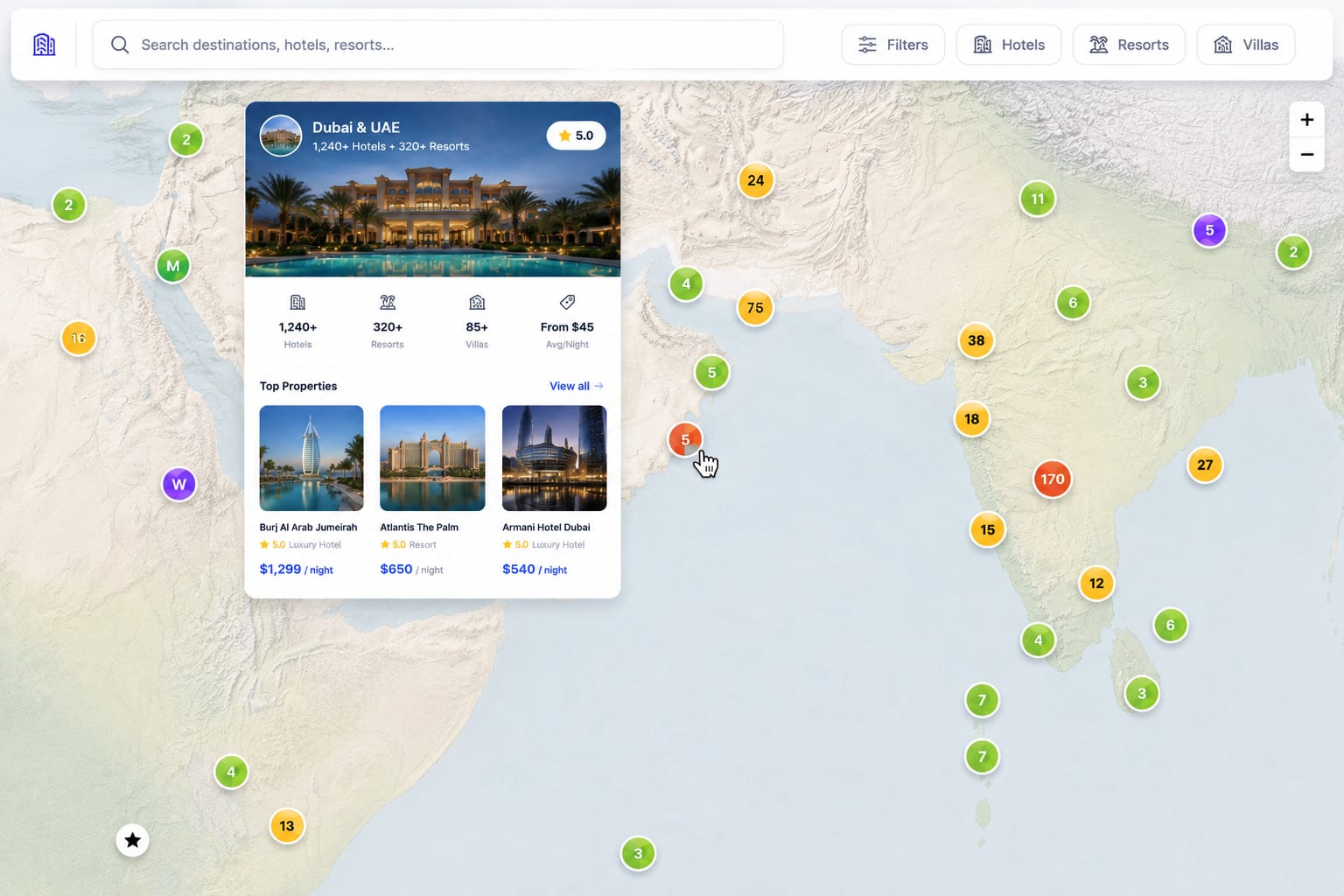
Most hotel searches start with a text box and end with a list of 400 results you scroll past. This one starts with the world. Open the FurlPay map and explore destinations visually — 507 curated luxury properties across 79 countries, every hotel OpenStreetMap knows layered underneath, ten collections from overwater villas to alpine chalets, and rates you can settle in USDC. Here is how to actually use it.
September 1, 2026 · 11 min read
Trip.com Now Takes Stablecoins — What It Signals for Travel Payments in 2026
Trip.com added USDT/USDC checkout in 2026, joining Travala, Wego and Meta's creator payouts in a broad shift to stablecoin money movement. Here is what changed, why it matters, and where Furlpay fits — USDC-native settlement, agentic booking, and a single-use Visa card for merchants that still take fiat only.
July 7, 2026 · 7 min read

Dubai Cashless 2026: How Hotels Can Accept Crypto Payments
Dubai is targeting a largely cashless economy, Emirates and Dubai Duty Free are enabling crypto, and Palazzo Versace already accepts it. Here is how any Dubai hotel can accept USDC at 0.5% — and the honest regulatory picture.
July 6, 2026 · 7 min read