Why Furlpay Is Adopting Open USD — the Visa, Mastercard & Coinbase Stablecoin Standard
By Furlpay · July 4, 2026 · 6 min read

On July 3, 2026, a new independent company called Open Standard launched Open USD (OUSD) — a fully-reserved US-dollar stablecoin backed by a consortium of more than 140 firms spanning banking, payments, tech and crypto: Visa, Mastercard, Stripe, Coinbase, BlackRock, BNY, Google, IBM, Ripple, OKX and Standard Chartered among them. The market reaction was immediate — Circle's stock fell roughly 13% within hours as traders priced OUSD as a direct competitor to USDC and USDT. This is the most significant stablecoin launch since USDC itself, and Furlpay is adopting it.
Why the industry wanted a neutral stablecoin
Today's dominant stablecoins are single-issuer: one company mints the token, holds the reserves, and keeps the interest those reserves earn. That concentrates both counterparty risk and economics. OUSD is structured to break that model. It's operated by Open Standard — an independent company whose board is composed of the consortium's partners, with founding CEO Zach Abrams — so no single firm controls issuance. Businesses can mint and redeem OUSD at no cost and with no volume caps, and nearly all of the interest earned on the backing reserves flows to partners after a management fee, rather than to one issuer.
What's actually different about OUSD
- Partner-governed, not single-issuer — reserve risk and revenue are distributed across the consortium, not held by one company.
- Free mint & redeem, no caps — treasuries can move in and out of OUSD without spread or volume limits, which matters for high-throughput settlement.
- Shared reserve revenue — the interest on reserves is returned to partners, changing the economics of every business that routes volume through it.
- Multi-chain from launch — OUSD goes live natively on Solana from day one, with Stellar, Base, Polygon and other chains following through 2026.
How Furlpay uses OUSD
Furlpay is a settlement-agnostic financial OS: the same API moves stablecoins for payments, fractional investing, and agentic x402 calls. Adding OUSD alongside USDC gives our users a neutral, institutional-grade dollar for two flows in particular — travel and brokerage.
- Travel — Furlpay Travels settles bookings routed through Travala's Agentic AI Travel Protocol in gasless stablecoin on Base and Solana. OUSD's zero-cost mint/redeem and native Solana support make it a natural funding token for both agent-initiated x402 bookings and single-use Visa virtual cards.
- Brokerage — fractional stock and ETF orders (via Alpaca) are funded from the same wallet. Settling in a consortium-backed dollar reduces the conversion friction between on-chain balances and regulated brokerage rails.
- Micro-transactions — high-throughput, low-fee settlement on Solana and Base makes sub-cent flows economically viable: pay-per-call API data over x402, per-booking travel insurance, and agent tips.
[ Furlpay wallet: USDC · OUSD ]
        │
        ├─ x402 / Travala booking ─▶ gasless settle on Base/Solana ─▶ 10% cbBTC rebate
        ├─ single-use Visa VCN ────▶ Visa × Bridge rails ───────────▶ 100+ countries
        └─ Alpaca fractional order ▶ regulated brokerage settlement
Because Furlpay never hard-codes a single settlement token, adopting OUSD is additive: existing USDC integrations keep working, and users gain a second dollar backed by the networks that already run global commerce. We'll roll OUSD support out first on Solana — where it launches natively — then Base, tracking Open Standard's own chain schedule.
The winning stablecoin for real-world commerce won't be the one with the best yield — it'll be the one payments networks, banks and merchants already trust. OUSD is that bet, and Furlpay is built to route it.
Furlpay
Written by the Furlpay team — engineers and compliance specialists building an on-chain financial operating system for stablecoin payments, travel, and investing on Arbitrum.
Don't miss the next one
Stay ahead of the curve
Get product updates, engineering deep-dives, and security bulletins. No spam — just the signal.
More in Travel
Explore the World, One Stay at a Time: Finding Hotels, Resorts and Villas on the Map
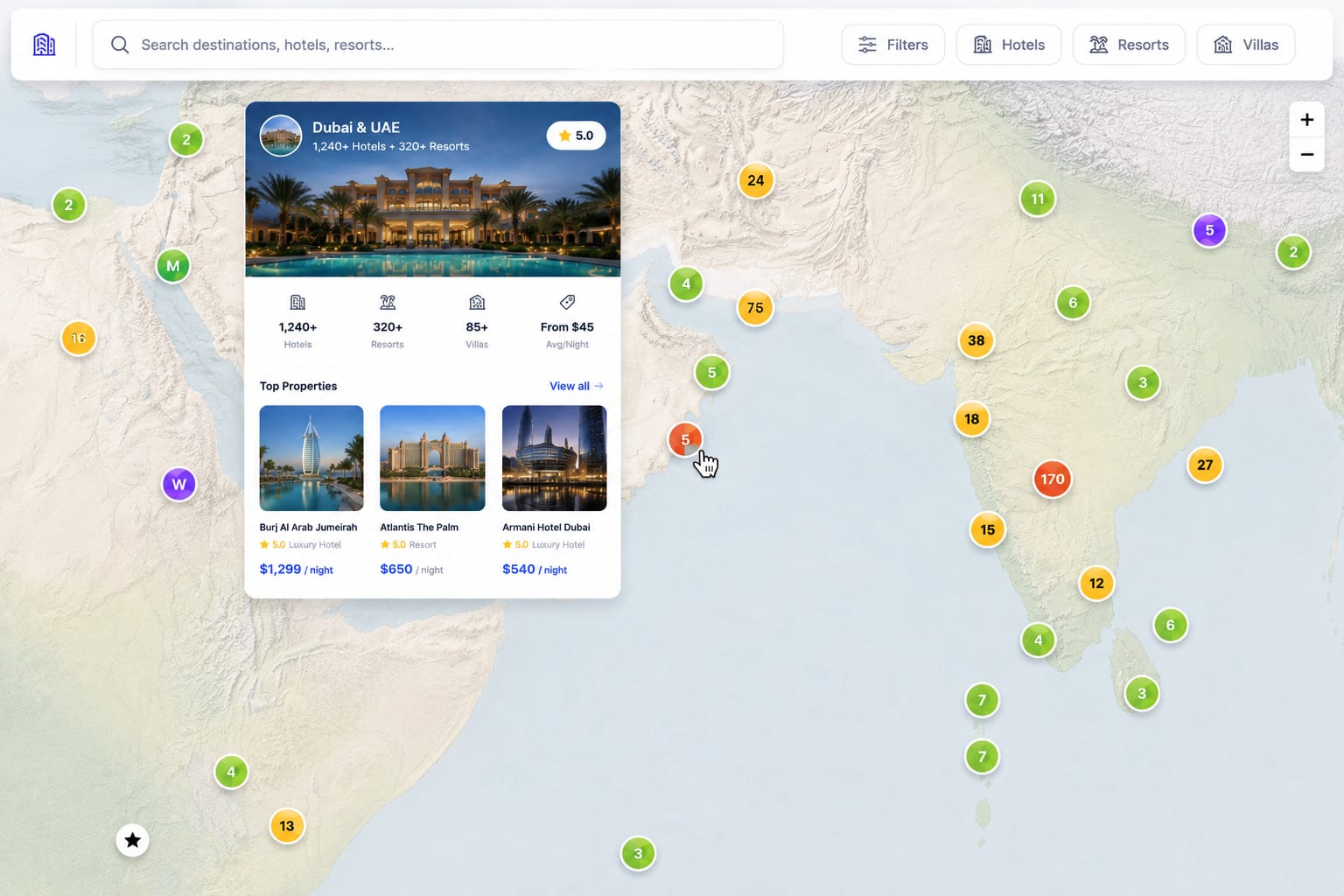
Most hotel searches start with a text box and end with a list of 400 results you scroll past. This one starts with the world. Open the FurlPay map and explore destinations visually — 507 curated luxury properties across 79 countries, every hotel OpenStreetMap knows layered underneath, ten collections from overwater villas to alpine chalets, and rates you can settle in USDC. Here is how to actually use it.
September 1, 2026 · 11 min read
Trip.com Now Takes Stablecoins — What It Signals for Travel Payments in 2026
Trip.com added USDT/USDC checkout in 2026, joining Travala, Wego and Meta's creator payouts in a broad shift to stablecoin money movement. Here is what changed, why it matters, and where Furlpay fits — USDC-native settlement, agentic booking, and a single-use Visa card for merchants that still take fiat only.
July 7, 2026 · 7 min read

Dubai Cashless 2026: How Hotels Can Accept Crypto Payments
Dubai is targeting a largely cashless economy, Emirates and Dubai Duty Free are enabling crypto, and Palazzo Versace already accepts it. Here is how any Dubai hotel can accept USDC at 0.5% — and the honest regulatory picture.
July 6, 2026 · 7 min read