Arbitrum vs Base for Payments: Which Layer 2 Should You Settle On?
By Furlpay Team · July 6, 2026 · 6 min read

Arbitrum and Base are both excellent Ethereum Layer 2 networks, both settle USDC for a fraction of a cent, and either would beat card rails on cost. So for a payments business the question is not "which is good" — both are — but which is the better default to settle on. This is our honest take, and why Furlpay chose Arbitrum.
| Factor | Arbitrum One | Base |
|---|---|---|
| Type | Optimistic rollup (Ethereum L2) | Optimistic rollup (Ethereum L2) |
| Gas per USDC transfer | ~$0.002 – $0.005 | ~$0.003 – $0.008 |
| Backing | Offchain Labs / Arbitrum DAO | Coinbase |
| Institutional footprint | Mastercard settlement, Robinhood Chain | Coinbase ecosystem, growing |
| Native USDC | Yes (Circle) | Yes (Circle) |
Where they are the same
Both are optimistic rollups securing to Ethereum, both have native Circle-issued USDC, and both offer sub-cent gas and fast confirmation. For most integrations the developer experience is similar, and Circle's CCTP lets USDC move between them. If your customers or partners are already on Base — for example, deep in the Coinbase ecosystem — settling on Base is entirely reasonable.
Why Furlpay defaults to Arbitrum
- Institutional volume already lives there: Mastercard runs 24/7 stablecoin settlement on Arbitrum, and Robinhood built its chain on Arbitrum Orbit.
- Mature Orbit ecosystem: a clear path to an app-specific chain later without changing rails.
- Consistently low, predictable fees for high-frequency payment and agent workloads.
None of this makes Base a bad choice — it is a strong network with a large ecosystem. It is a question of defaults, and for a payments and settlement product the institutional gravity around Arbitrum tipped it for us. We go deeper on the rail itself in USDC on Arbitrum.
The practical answer
Settle where your money and counterparties already are, and where fees are predictably tiny. For most businesses accepting stablecoin payments in 2026, that is Arbitrum — but Base is a close, legitimate second, and multi-chain via CCTP means you are not locked in either way.
Both chains make the gas cost a rounding error. So pick on ecosystem and finality, not on a tenth of a cent — and settle where the institutions already do.
This article is informational and not financial advice.

Founder & CEO, FurlPay · Software Engineer at Skyhigh Security · NeurIPS 2026 author · Google DeepMind contributor · ex-Quantiphi
Ashutosh is a Software Engineer at Skyhigh Security (previously Quantiphi), working across ML systems and cloud infrastructure. He is a contributor to Google DeepMind and a NeurIPS 2026 author. He is building Furlpay: stablecoin payments, travel booking, and investing in one client — settled on Arbitrum. Pay in USDC, book 2.2M+ stays and flights, and let AI agents pay per-request via x402. Phishing-resistant. Compliance-aware. Zero gas.
Don't miss the next one
Stay ahead of the curve
Get product updates, engineering deep-dives, and security bulletins. No spam — just the signal.
More in Engineering
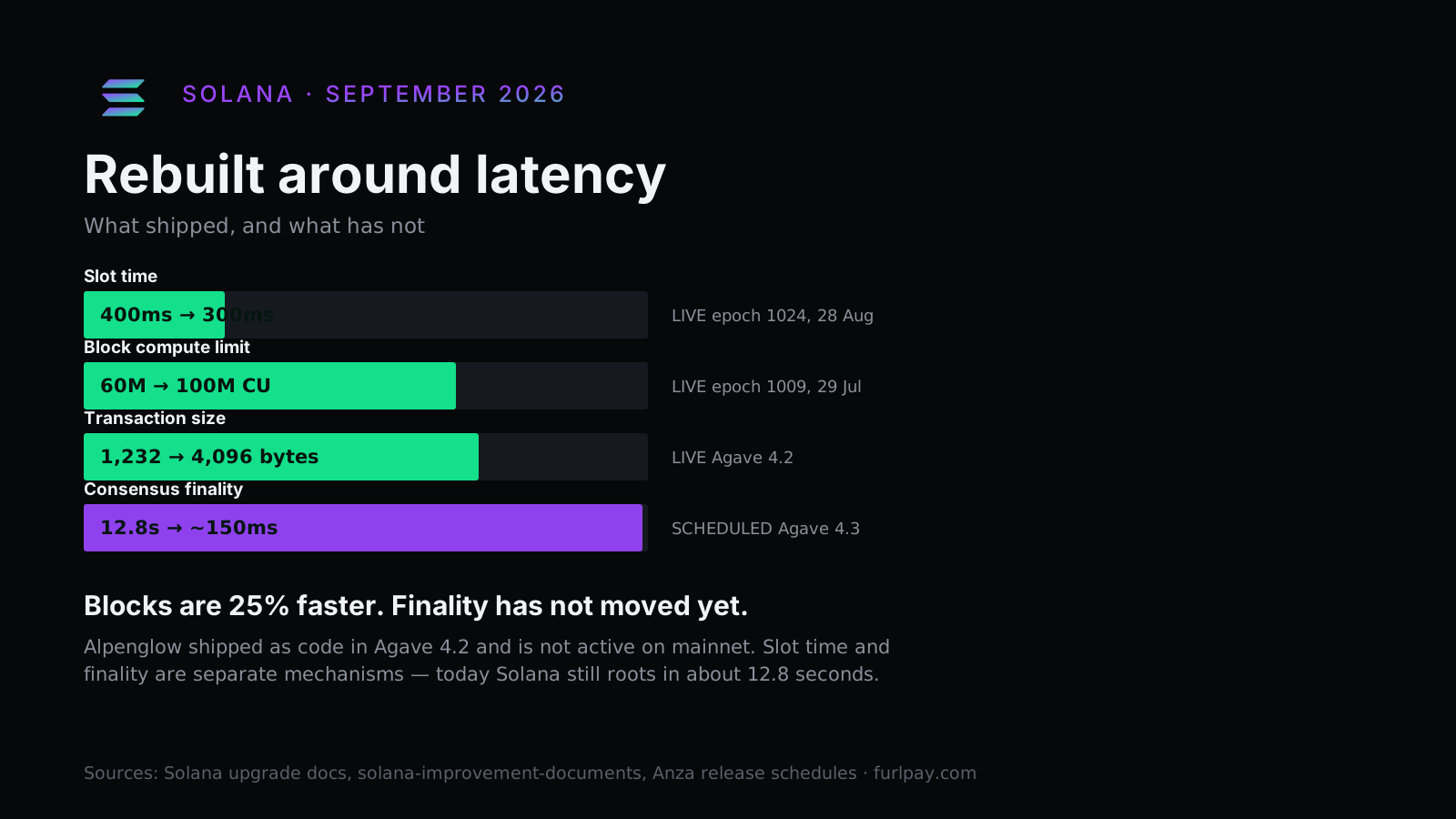
Solana Is Being Rebuilt Around Latency, Not Throughput
Updated 12 October: slot times reached 200ms in October, and Alpenglow is still not live on mainnet. In August 2026 Solana cut its slot time below 400ms for the first time since genesis, and block capacity had already risen 66% to 100M compute units. But finality still takes 12.8 seconds — the upgrade that changes that is scheduled, not shipped. What is actually live, what is not, and why the roadmap is a latency story rather than a TPS one.
September 7, 2026 · 15 min read
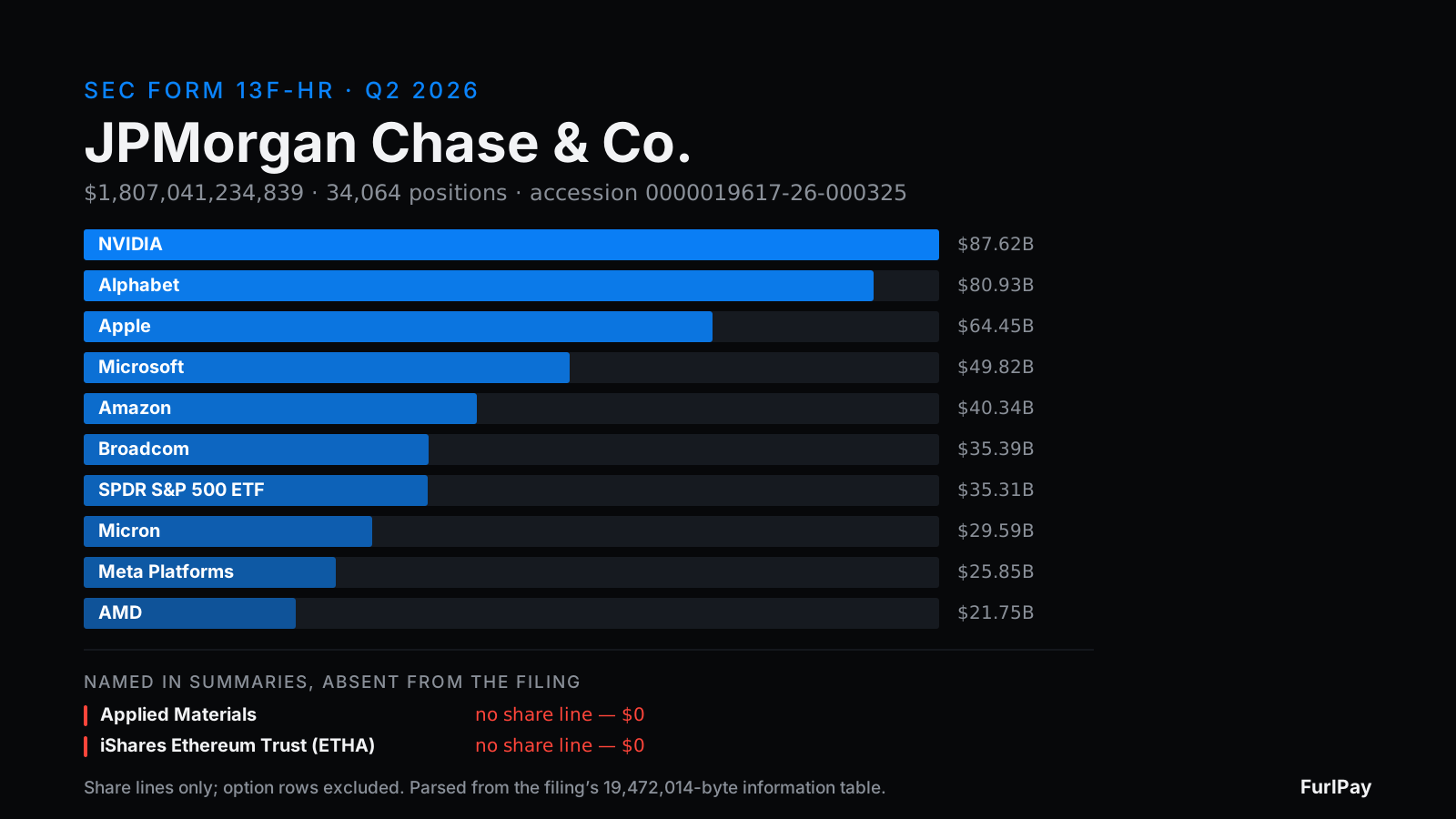
JPMorgan 13F Q2 2026: What the SEC Filing Actually Shows
JPMorgan reported $1,807,041,234,839 across 34,064 information-table rows for the quarter ended 30 June 2026. We parsed the original SEC XML twice and reconciled it to the dollar. Here is what the filing shows on the iShares Ethereum and Bitcoin trusts, Strategy, the bitcoin miners and the semiconductor names — and why the same filing produces different position counts, share totals and rankings depending on how the rows are read.
September 2, 2026 · 18 min read

Bypassing the 3% Card Tax: How I Built an x402 Settlement Layer for AI Agents and Travelers on Arbitrum
A $340 resort checkout loses $11.90 to five intermediaries before it reaches the hotel — three days later. Here is how I built Furlpay's x402 settlement layer on Arbitrum instead: the actual contract code, measured gas benchmarks from the 34-test suite, the paymaster math behind zero-gas UX, and a direct answer to 'why not just use Stripe?'
July 8, 2026 · 11 min read