USDC vs USDT for Payments: Which Stablecoin Should a Business Accept?
By Furlpay Team · July 6, 2026 · 6 min read

USDT (Tether) and USDC (Circle) are both dollar-pegged stablecoins, and both let a business get paid in something that holds its value between the sale and the settlement. But they are not interchangeable when you are the one accepting them. The differences that matter for a merchant are reserve quality, attestation cadence, regulatory posture, and which chains they are cheap to move on — not which has the larger market cap.
The short answer
For accepting payments in the US and EU, USDC is generally the safer default: it publishes monthly third-party attestations, holds reserves in cash and short-dated US Treasuries, and is issued by a US-regulated company that has leaned into compliance frameworks like MiCA. USDT has the deepest liquidity and widest exchange support globally, which matters if your counterparties are international, but its reserve disclosures are less granular. Furlpay settles in USDC on Arbitrum for exactly these reasons.
| Factor | USDC (Circle) | USDT (Tether) |
|---|---|---|
| Issuer | Circle (US-regulated) | Tether (offshore) |
| Reserves | Cash + short-dated US Treasuries | Mixed; less granular disclosure |
| Attestations | Monthly, third-party | Quarterly, less detailed |
| Regulatory posture | Proactive (MiCA, US frameworks) | Broad global usage, lighter disclosure |
| Liquidity | Deep, growing | Deepest globally |
| Best for | US/EU merchants, compliance | International reach, exchanges |
Why reserve transparency matters to a merchant
When you accept a stablecoin, you are briefly holding a claim on the issuer's reserves. If the peg wobbles because the market doubts those reserves, you eat the difference on money you have already earned. USDC's monthly attestations and Treasury-heavy reserves make that tail risk easier to reason about. This is the same reason we wrote about reserve transparency and MiCA — the compliance posture is not paperwork, it is what backs the dollar you just got paid.
The chain matters as much as the coin
A stablecoin is only as cheap to accept as the network it settles on. USDC on Ethereum mainnet can cost several dollars in gas per transfer; the same USDC on Arbitrum costs a fraction of a cent. That is why Furlpay settles USDC on Arbitrum One (Chain ID 42161) rather than mainnet — the coin is dollar-stable and the rail is sub-cent. Read USDC on Arbitrum for the integration details.
So which should you accept?
- Selling mostly to US and EU customers, or care about audit and compliance: accept USDC.
- Selling to a global, crypto-native audience that already holds USDT on exchanges: supporting USDT can reduce customer friction.
- Either way, settle on a low-fee chain like Arbitrum — the network choice affects your cost more than the coin choice does.
Market cap tells you how popular a stablecoin is. Attestations and reserves tell you how safe it is to be paid in one. For a merchant, the second question is the one that costs money.
This article is informational and not financial or legal advice. Stablecoins carry issuer and peg risk and are not deposit-insured. Compare how acceptance works on our payments and merchant pages.

Founder & CEO, FurlPay · Software Engineer at Skyhigh Security · NeurIPS 2026 author · Google DeepMind contributor · ex-Quantiphi
Ashutosh is a Software Engineer at Skyhigh Security (previously Quantiphi), working across ML systems and cloud infrastructure. He is a contributor to Google DeepMind and a NeurIPS 2026 author. He is building Furlpay: stablecoin payments, travel booking, and investing in one client — settled on Arbitrum. Pay in USDC, book 2.2M+ stays and flights, and let AI agents pay per-request via x402. Phishing-resistant. Compliance-aware. Zero gas.
Don't miss the next one
Stay ahead of the curve
Get product updates, engineering deep-dives, and security bulletins. No spam — just the signal.
More in Legal & Compliance
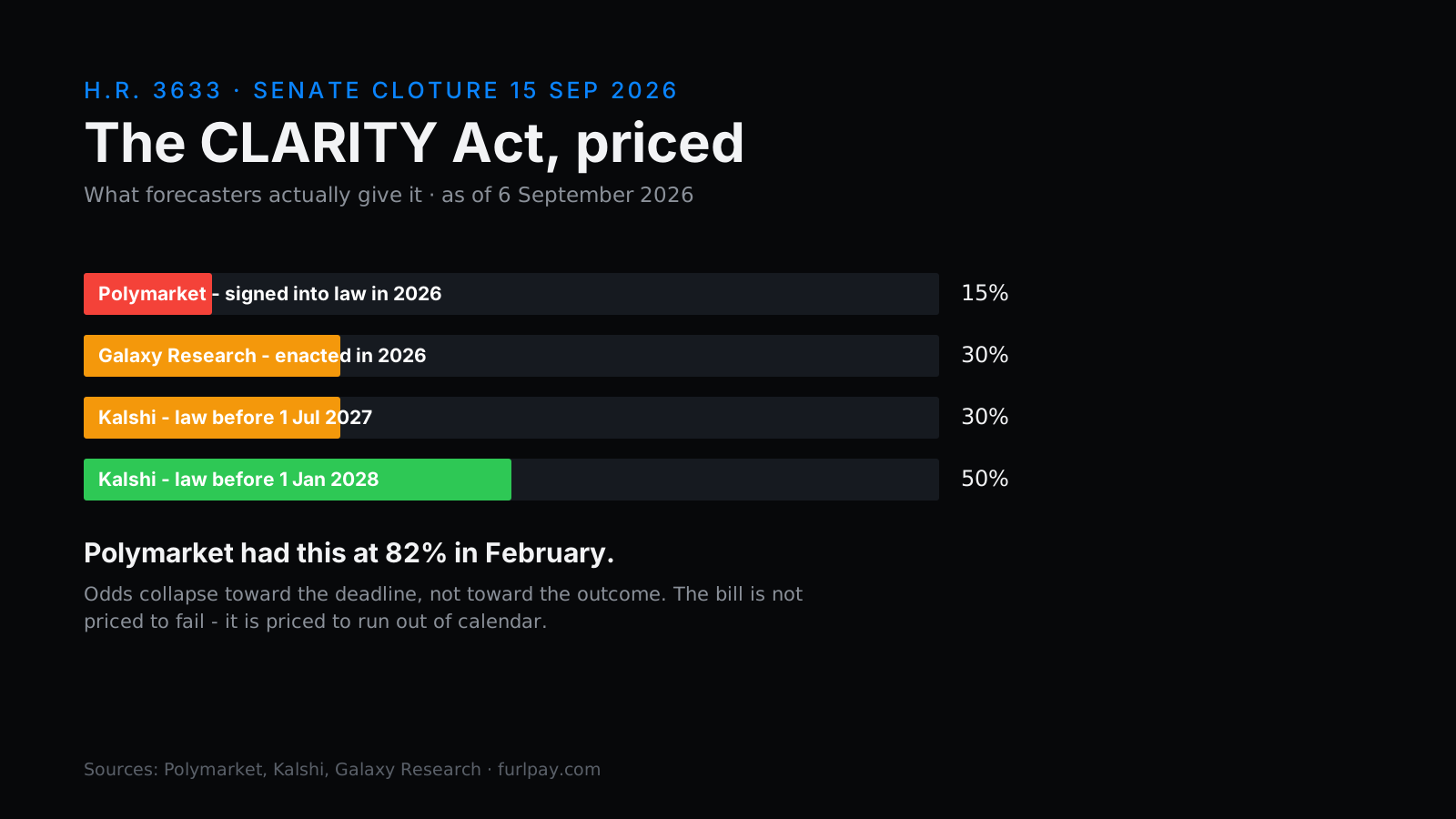
The CLARITY Act Is Not Dead. It Is Running Out of Calendar.
Updated 12 October: the 15 September cloture vote failed 49–50. Before it, prediction markets gave the CLARITY Act a 15% chance of becoming law in 2026 — and 50% by January 2028. The bill is late, not dead. Meanwhile JPMorgan settles more than $7bn a day in tokenized deposits without waiting for it. What the 15 September Senate vote decided, what atomic settlement does and does not fix, and why the strongest objections come from the people who understand market structure best.
September 7, 2026 · 23 min read
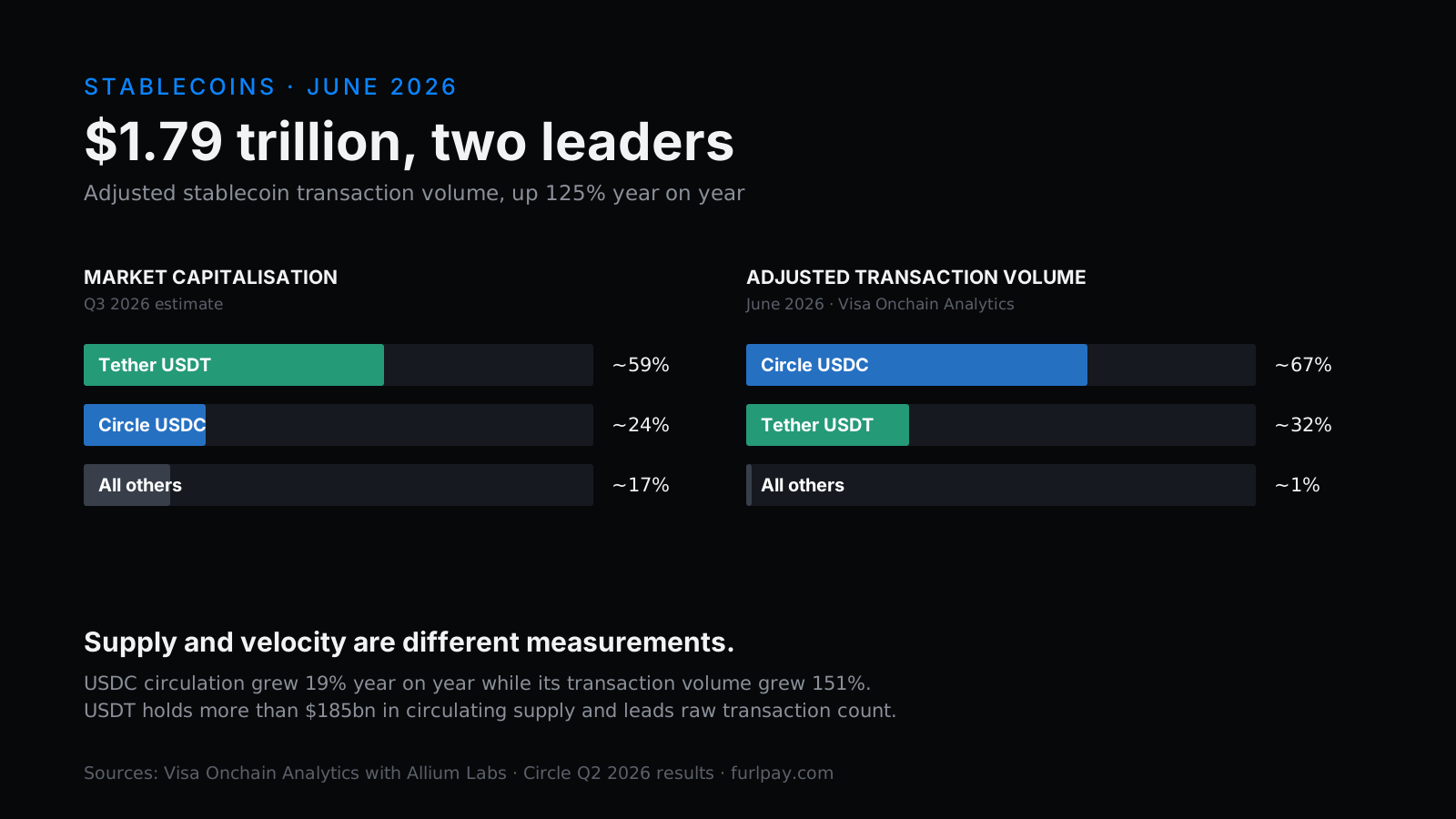
Stablecoin Transaction Volume in 2026: Circle, Tether and the Race to Build the Payment Rail
Stablecoins settled $1.79 trillion in adjusted transaction volume in June 2026, up 125% year on year. USDC accounted for approximately 67% of that volume; USDT remains the largest stablecoin by market capitalisation at more than $185 billion. An analysis of what each metric measures, where Circle and Tether actually stand, and what Visa, Mastercard, Stripe, PayPal and Coinbase are building around them.
September 7, 2026 · 15 min read

Stablecoins Quietly Overtook Crypto for Cross-Border Payments — Here Is the Data
In 2025 stablecoins settled about $33 trillion on-chain, more than Visa and Mastercard combined, while Bitcoin and Ethereum's share of cross-border flows kept shrinking. The GENIUS Act, Stripe's $1.1B Bridge deal and Mastercard's $1.8B BVNK deal all landed in the same window. Here is what actually happened, with the figures checked against primary sources — and where a middleware layer like FurlPay fits.
July 18, 2026 · 12 min read