The Tokenized Economy Still Needs a Cash Register: Stablecoins as the RWA Settlement Layer
By Furlpay Team · July 7, 2026 · 7 min read

Real-world asset (RWA) tokenization stopped being a thesis and became a balance sheet in 2026. On-chain RWA value sits around $26–36B depending on how you count, tokenized US Treasuries alone are roughly $12.9B, and BlackRock's tokenized money-market fund (BUIDL) passed $2.5B in May. Boston Consulting Group and Ripple project the broader market reaching $18.9T by 2033 — a number worth treating as a direction, not a promise, given how wide the published estimates run.
Ahead of the RWA Week panel "Who Owns the Tokenized Economy" (8 July 2026), it is worth being precise about one layer everyone assumes and few build: settlement. A tokenized asset is a claim. Turning that claim into money still needs a payment rail — and that is a different problem from issuing the token.
Tokenization solves ownership, not payment
Tokenizing an asset answers "who owns this, and can I transfer a fraction of it." It does not answer "how does the coupon get paid, how does a buyer settle, how does a guest actually pay the hotel whose shares were just tokenized." Those are settlement questions, and today they mostly fall back to bank wires (multi-day) or card rails (1.5–3.5% and chargeback-prone) — the exact frictions tokenization set out to remove.
| Layer | What it does | Who builds it |
|---|---|---|
| Issuance | Mints the token that represents the asset | Ondo, Franklin Templeton, BlackRock/Securitize |
| Marketplace | Lists and trades the tokenized asset | InvestaX, tokenization platforms, exchanges |
| Settlement | Moves money for the trade, coupon or real-world use | Stablecoin payment rails |
Where stablecoins fit — and where Furlpay does
Stablecoins are the natural settlement asset for tokenized markets: dollar-stable, borderless, final in about a second on a network like Arbitrum. Furlpay builds that settlement layer — a USDC payments API that settles on Arbitrum for a flat 0.5%, plus an x402 facilitator so machines and platforms can pay per call. That is the honest edge of what we do.
We should be equally clear about what we do not do. Furlpay is not an RWA issuer. We do not tokenize hotels, issue fractional property shares, or operate a securities marketplace, and nothing here is an offer of any tokenized investment. Our role is upstream of ownership and downstream of it: the rail that moves dollars when a tokenized asset needs to be paid for, or when the real-world business behind it — a hotel, an airline, a merchant — takes a payment.
The concrete example: tokenized hospitality
Take a hotel whose ownership is tokenized so global investors can hold a fraction. That structure is only compelling if the underlying property runs efficiently — and a property that still pays 3% plus FX on every international guest is leaking yield the tokenization was supposed to unlock. A hotel accepting USDC at 0.5% (see how) improves the real cash flows the token is a claim on. Settlement and ownership are two ends of the same asset.
Public rails, regulated wrappers
The regulatory direction reinforces this. The US GENIUS Act, the EU's MiCA, Japan's June 2026 recognition of USDC as an Electronic Payment Instrument, and Dubai's VARA regime all point the same way: regulated wrappers on top of public blockchains, not walled-garden chains. Settlement infrastructure that is compliance-aware on a public network is exactly the shape those frameworks reward. Furlpay states its own regulatory status plainly on each market's trust page rather than overclaiming it.
A tokenized asset without a settlement rail is a share certificate you cannot cash. The tokenized economy will be owned by whoever makes the money move — cheaply, instantly, and within the rules.
Furlpay is not a bank and is not an issuer of securities or tokenized real-world assets. Crypto assets are high risk and can lose value. Market figures are third-party estimates as of mid-2026 and vary by source. This article is information, not financial or legal advice.

Founder & CEO, FurlPay · Software Engineer at Skyhigh Security · NeurIPS 2026 author · Google DeepMind contributor · ex-Quantiphi
Ashutosh is a Software Engineer at Skyhigh Security (previously Quantiphi), working across ML systems and cloud infrastructure. He is a contributor to Google DeepMind and a NeurIPS 2026 author. He is building Furlpay: stablecoin payments, travel booking, and investing in one client — settled on Arbitrum. Pay in USDC, book 2.2M+ stays and flights, and let AI agents pay per-request via x402. Phishing-resistant. Compliance-aware. Zero gas.
Don't miss the next one
Stay ahead of the curve
Get product updates, engineering deep-dives, and security bulletins. No spam — just the signal.
More in Product News
FurlPay Wallet Names Are Live: Claim the Handle Your AI Agents Will Pay With
Reserve yourname.furlpay.com — one human-readable identity for you and every agent you run. Here is why payment handles suddenly matter in 2026, how the x402 standard turned HTTP into a payment rail, exactly how reservation and consent work under the hood, and the security decisions behind binding a name to an account.
August 10, 2026 · 12 min read
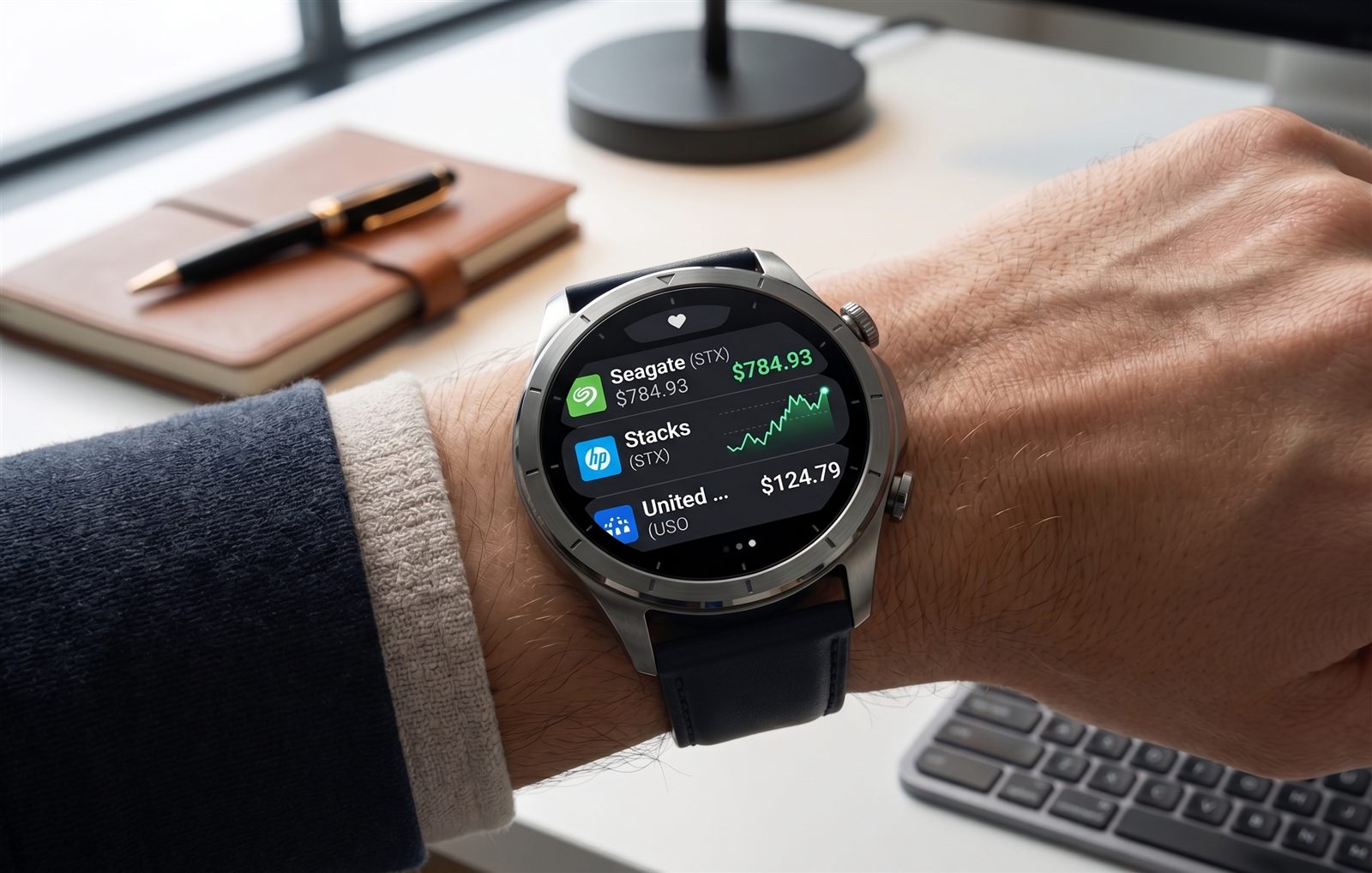
FurlPay on Your Wrist: Introducing the Wear OS App
Your portfolio, live market charts, one-tap Buy and Sell, card controls, USDC receive codes, flight booking and a voice assistant — on a watch. Here is a detailed walkthrough of every screen in the FurlPay Wear OS companion, how it stays secure without your phone, and why it is open source.
July 18, 2026 · 10 min read
The Stablecoin Rail Question: UPI vs Solana vs Polygon — and Where Furlpay Settles
Every serious payments platform now has to pick a settlement layer. We compared UPI, Solana and Polygon on the metrics that actually matter for moving a stablecoin dollar across borders — cost, finality, liquidity and AI-agent readiness. The honest answer is not one rail, it is stablecoins on the right rail for each job.
July 7, 2026 · 11 min read