The Stablecoin Rail Question: UPI vs Solana vs Polygon — and Where Furlpay Settles
By Furlpay Team · July 7, 2026 · 11 min read
Ask ten fintech founders which payment rail they are building on and you will get ten answers. Ask what they are actually moving, and you get one: a stablecoin. The rail is the road; the stablecoin is the car. For a travel platform like Furlpay — cross-border payments, virtual card issuance, and AI agents that book hotels on their own — the road you pick decides how fast, how cheap, and how programmable that dollar can be.
So we ran the comparison the way an operator would, not a chain maximalist. We put India's UPI — the world's largest real-time retail rail — next to Solana and Polygon, the two chains carrying the most stablecoin volume in 2026. This post is deliberately narrow: not "which chain is best," but "which rail moves a stablecoin dollar best, for which job." That distinction is the whole ballgame.
The one metric that reframes everything: stablecoin support
Start with the fact that ends the debate for a global product before it begins. UPI, for all its dominance, does not carry stablecoins at all. It is a sovereign rail that moves rupees between Indian bank accounts, brilliantly, at a scale no blockchain has matched — but it cannot hold, transfer or settle USDC. Solana and Polygon are stablecoin-native by design. Once your product needs to move value across a border in a dollar-denominated asset, UPI stops being a competitor and becomes something more useful: an on-ramp.
| What you care about | UPI (NPCI) | Solana | Polygon (PoS) |
|---|---|---|---|
| Carries stablecoins? | No — INR only | Yes — USDC, USDT, PYUSD, EURC | Yes — USDC, USDT (EVM) |
| Programmable (smart contracts) | No | Yes | Yes (EVM) |
| Typical finality | Instant (fiat ledger) | Sub-second (~400ms) | ~2-3s (PoS) |
| Fee to move a payment | Zero MDR (bank-subsidised) | Fractions of a cent | ~1-5 cents |
| Geography | India only | Global | Global |
| AI-agent / x402 ready | No | Yes | Yes |
Read that table the way a treasury team would: UPI wins the domestic-India row outright and loses every cross-border and programmability row by default. That is not a knock on UPI — it is doing exactly what a national instant-payment system is supposed to do. It is a statement about scope. A borderless travel wallet lives in the rows where UPI is marked "No."
Why stablecoins, specifically — not just 'crypto'
A stablecoin is the only crypto instrument that behaves like the thing a traveller actually wants to hold: a dollar (or euro) that does not swing 8% while they sleep. That price stability is what makes it a payment rail rather than a speculation. When a customer in Lagos books a hotel in Lisbon, the value that leaves their wallet and the value that lands with the merchant have to be the same number. Stablecoins guarantee that; volatile tokens cannot.
- Settlement is final and near-instant — no multi-day correspondent-bank chain, no Swift message sitting in a queue over a weekend.
- The unit is a dollar, so pricing, refunds and accounting stay legible to a merchant who has never touched a blockchain.
- It is programmable — an escrow can hold a booking deposit and release it on check-in, all in code, with no card processor in the loop.
- It settles the same way at 3pm on a Tuesday and 3am on a Sunday. Payment rails that observe banking hours do not.
This is why the largest names in payments spent the last two years moving the same direction. Mastercard brought stablecoin settlement on-chain, Visa piloted USDC settlement with acquirers, and Stripe relaunched crypto checkout settling merchants in stablecoins. None of them adopted "crypto." They adopted stablecoins. The rail was a downstream decision.
Cost of moving a stablecoin dollar
For a low-margin travel booking, the fee to move money is not a rounding error — it is a slice of the profit on every transaction. Here is the picture per million dollars settled, using published fee ranges rather than best-case marketing numbers.
| Rail | Per-transaction fee | Cost per $1M settled | Notes |
|---|---|---|---|
| Solana | ~$0.00025 | ~$1 | Cheapest at scale; sub-second finality |
| Polygon PoS | ~$0.01-0.05 | ~$10-50 | EVM liquidity; fees track Ethereum congestion |
| UPI (domestic INR) | Zero MDR | ~$0 | Free to users, but bank/government subsidised — and INR-only |
| Card rails (reference) | 1.5-3.5% | $15,000-35,000 | The baseline stablecoins are undercutting |
The gap between the stablecoin rows and the card row is three to four orders of magnitude. That is the entire economic case for stablecoin payments in one table. Between Solana and Polygon the absolute difference is cents, which matters enormously at micropayment scale (an AI agent paying per API call) and rounds to noise for a $400 hotel booking. So "cheapest chain" is the wrong question. "Cheapest chain for this specific payment size" is the right one.
The new customer: AI agents pay in stablecoins by default
The fastest-growing payer of 2026 is not a person with a card — it is software. The x402 protocol revives HTTP's dormant 402 "Payment Required" status so an autonomous agent can pay per request in stablecoins, with no account and no card on file. An agent booking a trip does not open a checkout page; it hits an endpoint, receives a 402 with a price, pays in USDC, and retries. That flow only works on a rail that is stablecoin-native and programmable — which rules UPI out entirely and puts Solana and Polygon (and Furlpay's home rail, Arbitrum) squarely in scope.
AI agent                     Furlpay x402 endpoint
   |                                   |
   |------ GET /api/travel/search ---->|
   |                                   |
   |<----- 402 Payment Required -------|   price quote, in USDC,
   |        (quote + pay-to)           |   bound to this exact request
   |                                   |
   |--- sign stablecoin authorization->|
   |                                   |   nonce checked, sanctions
   |                                   |   screened, settled on-chain
   |<---------- 200 OK ----------------|
   |          (search results)         |
Furlpay runs its own x402 facilitator across Arbitrum, Base and Solana, built around the attack classes documented in recent x402 security research (see "Free-Riding the Agentic Web"): quotes are cryptographically bound to the resource they price, nonces are single-use, and malformed payment headers fail closed. The point is not which chain the agent pays on — it is that the payment is a stablecoin, and the rail is interchangeable underneath.
So which rail wins? The wrong question.
A research report can crown a single winner because it optimises one number. An operator cannot, because different payments have different shapes. A sub-cent AI-agent micropayment, a $400 cross-border hotel booking and an Indian traveller topping up their wallet in rupees are three different jobs, and no single rail is best at all three. Forcing them onto one chain is how you end up paying Solana's speed tax on an EVM-liquidity problem, or trying to route a stablecoin through a rail that cannot hold one.
Furlpay's answer is stablecoin-first and multi-rail. The stablecoin is the constant; the rail is chosen per job.
| Job | Rail we use | Why |
|---|---|---|
| Core settlement & booking escrow | Arbitrum (USDC) | Sub-cent fees, Ethereum-grade security, deep stablecoin liquidity — the same rail Mastercard and Robinhood chose |
| AI-agent x402 payments | Arbitrum / Base / Solana | Meet agents on whichever stablecoin rail they already hold value on |
| EVM enterprise liquidity | Polygon / Base via Circle CCTP | Bridge institutional USDC in without slippage, settle back to the core |
| Local fiat on/off-ramp | UPI (India), Pix (Brazil), FedNow (US) | Convert INR/BRL/USD to a stablecoin at the edge — never the core ledger |
Note where UPI lands: not as a rejected competitor, but as the best on-ramp in the world for its market. An Indian traveller funds their Furlpay wallet in rupees over UPI, that value converts to USDC through a domestic partner, and from there it moves globally on a programmable rail. UPI does the one thing it is unmatched at — getting rupees into the system instantly and for free — and hands off to a stablecoin for everything that crosses a border.
The bottom line
The rail debate is a proxy for a decision that was already made: payments are going stablecoin-native. UPI proves a national rail can move billions of transactions but cannot carry a dollar across a border. Solana and Polygon prove a stablecoin can settle globally in seconds for cents. The winning architecture is not a chain — it is a stablecoin, settled on the right rail for each job, with local instant-payment systems feeding the edges. That is the system Furlpay is building: pay in USDC, book 2.2M+ stays and flights, and let AI agents pay per request via x402 — settled on Arbitrum, bridged where it needs to be, and ramped from wherever the money starts.

Founder & CEO, FurlPay · Software Engineer at Skyhigh Security · NeurIPS 2026 author · Google DeepMind contributor · ex-Quantiphi
Ashutosh is a Software Engineer at Skyhigh Security (previously Quantiphi), working across ML systems and cloud infrastructure. He is a contributor to Google DeepMind and a NeurIPS 2026 author. He is building Furlpay: stablecoin payments, travel booking, and investing in one client — settled on Arbitrum. Pay in USDC, book 2.2M+ stays and flights, and let AI agents pay per-request via x402. Phishing-resistant. Compliance-aware. Zero gas.
Don't miss the next one
Stay ahead of the curve
Get product updates, engineering deep-dives, and security bulletins. No spam — just the signal.
More in Product News
FurlPay Wallet Names Are Live: Claim the Handle Your AI Agents Will Pay With
Reserve yourname.furlpay.com — one human-readable identity for you and every agent you run. Here is why payment handles suddenly matter in 2026, how the x402 standard turned HTTP into a payment rail, exactly how reservation and consent work under the hood, and the security decisions behind binding a name to an account.
August 10, 2026 · 12 min read
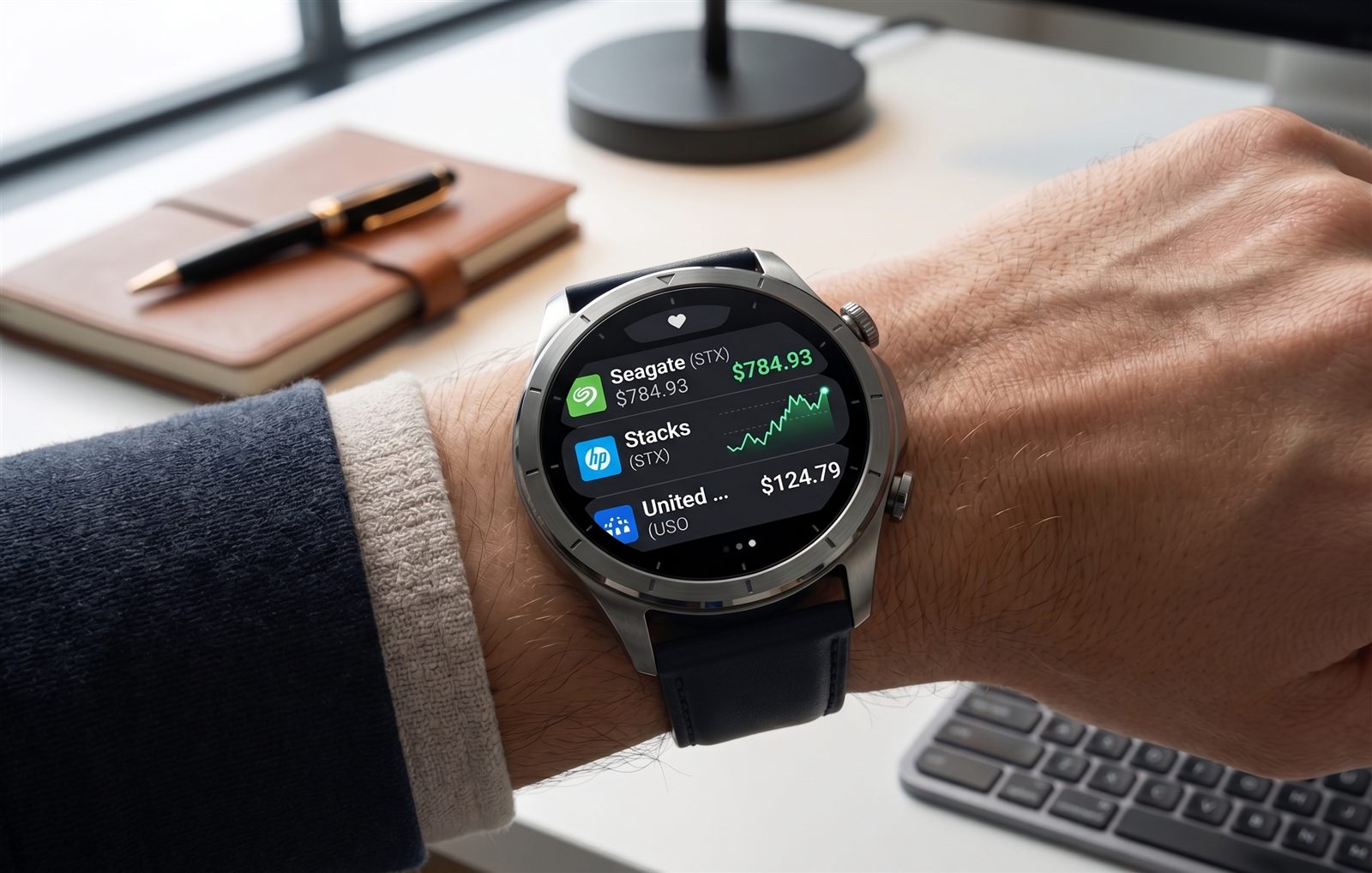
FurlPay on Your Wrist: Introducing the Wear OS App
Your portfolio, live market charts, one-tap Buy and Sell, card controls, USDC receive codes, flight booking and a voice assistant — on a watch. Here is a detailed walkthrough of every screen in the FurlPay Wear OS companion, how it stays secure without your phone, and why it is open source.
July 18, 2026 · 10 min read

The Tokenized Economy Still Needs a Cash Register: Stablecoins as the RWA Settlement Layer
Roughly $27B of real-world assets are now on-chain and BlackRock's BUIDL alone passed $2.5B. But a tokenized Treasury or hotel share is only half a market — it still needs a payment rail. Here is where stablecoin settlement fits, and where Furlpay honestly does and does not play.
July 7, 2026 · 7 min read