Solving Card Declines: Time-Locked Pre-Authorization Escrows
By Protocol Engineering · June 1, 2026 · 5 min read
The card hold problem
Self-custodial debit cards frequently fail at gas pumps, hotels and car rental agencies. Traditional card networks require a pre-authorization hold (for example, locking $150 at the pump before fuel is dispensed). Because on-chain smart wallets can't easily support temporary hold states, these transactions are usually declined automatically.
The Furlpay escrow solution
To solve this, Furlpay developed the Pre-Authorization Escrow Contract. When a merchant requests a hold, our backend creates an isolated, time-locked escrow and moves the hold amount from the user's wallet into it.
[ Merchant pre-auth ] ──> [ Time-locked Escrow ] ──(final amount)──> [ Merchant ]
                                 │
                                 └──(remainder / 7-day expiry)──> [ User Wallet ]
Once the final purchase amount settles, the escrow releases that amount to the merchant and returns the remaining balance to the user. If the merchant never claims the funds, the escrow automatically expires after 7 days, returning the entire deposit to the user — no stuck holds, no manual reversals.
Furlpay
Written by the Furlpay team — engineers and compliance specialists building an on-chain financial operating system for stablecoin payments, travel, and investing on Arbitrum.
Don't miss the next one
Stay ahead of the curve
Get product updates, engineering deep-dives, and security bulletins. No spam — just the signal.
More in Engineering
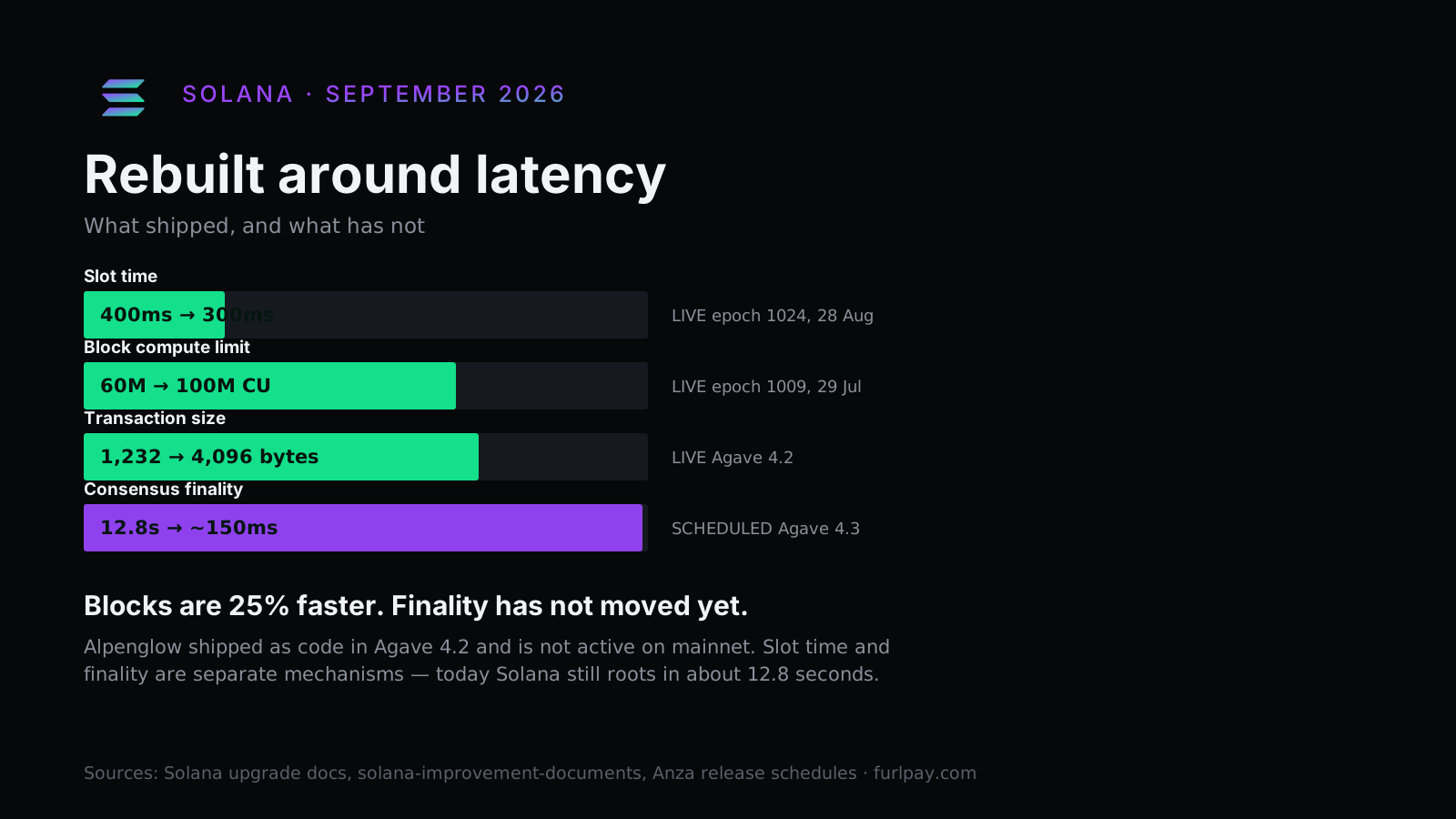
Solana Is Being Rebuilt Around Latency, Not Throughput
In August 2026 Solana cut its slot time below 400ms for the first time since genesis, and block capacity had already risen 66% to 100M compute units. But finality still takes 12.8 seconds — the upgrade that changes that is scheduled, not shipped. What is actually live, what is not, and why the roadmap is a latency story rather than a TPS one.
September 7, 2026 · 15 min read
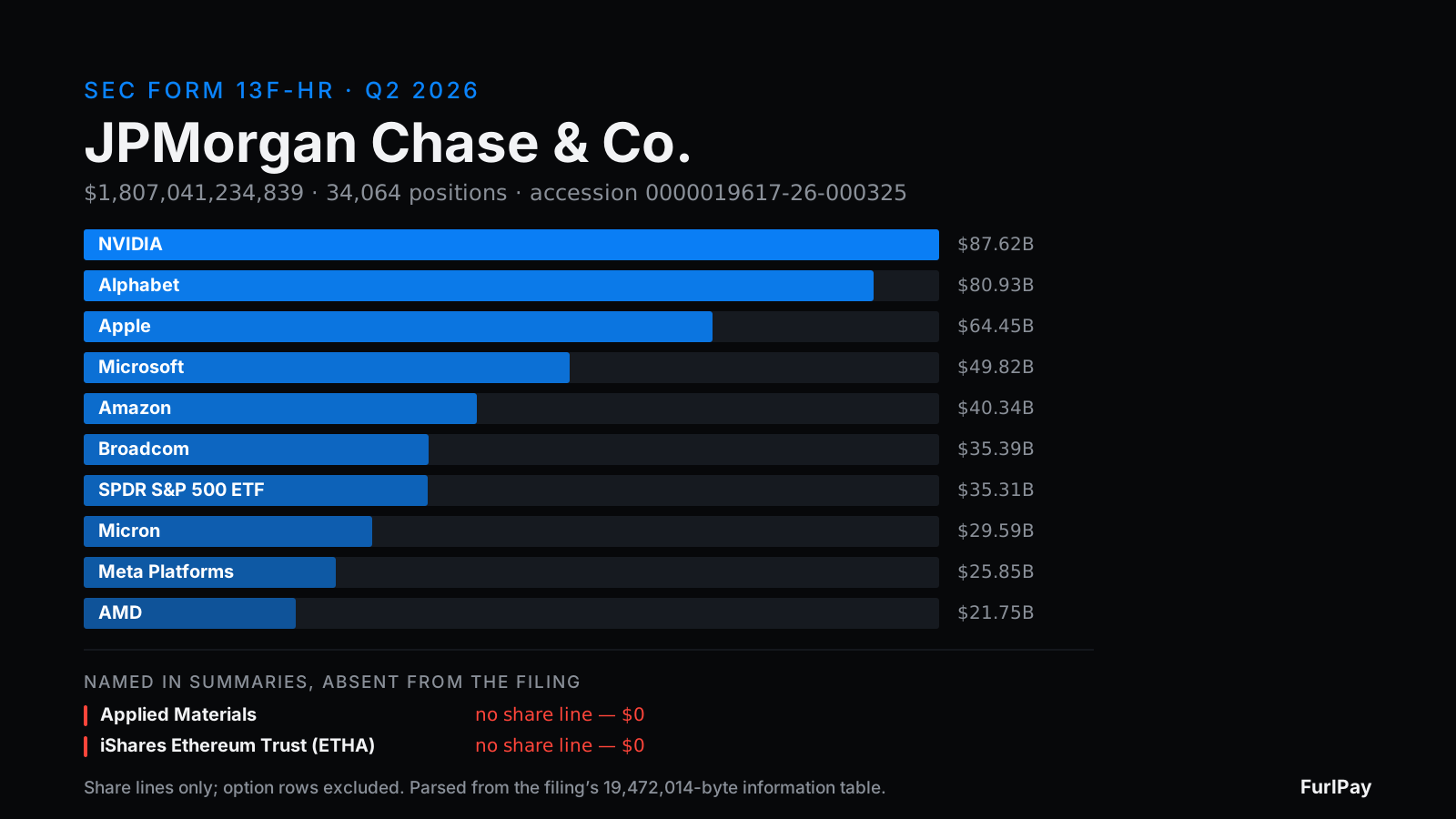
JPMorgan 13F Q2 2026: What the SEC Filing Actually Shows
JPMorgan reported $1,807,041,234,839 across 34,064 information-table rows for the quarter ended 30 June 2026. We parsed the original SEC XML twice and reconciled it to the dollar. Here is what the filing shows on the iShares Ethereum and Bitcoin trusts, Strategy, the bitcoin miners and the semiconductor names — and why the same filing produces different position counts, share totals and rankings depending on how the rows are read.
September 2, 2026 · 18 min read

Bypassing the 3% Card Tax: How I Built an x402 Settlement Layer for AI Agents and Travelers on Arbitrum
A $340 resort checkout loses $11.90 to five intermediaries before it reaches the hotel — three days later. Here is how I built Furlpay's x402 settlement layer on Arbitrum instead: the actual contract code, measured gas benchmarks from the 34-test suite, the paymaster math behind zero-gas UX, and a direct answer to 'why not just use Stripe?'
July 8, 2026 · 11 min read